
Thai Broiler Processing Exporters Association
สมาคมผู้ส่งออกไก่แปรรูปไทย
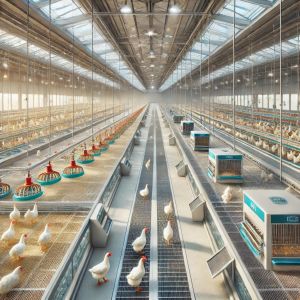
: Advanced poultry housing refers to modern, technologically enhanced facilities designed to optimize the living conditions and welfare of poultry. These systems incorporate climate control, automated feeding and watering, and biosecurity measures to ensure a healthy and productive environment for poultry. By improving efficiency in poultry management, advanced housing solutions contribute to higher production rates, better animal welfare, and enhanced disease prevention. These innovations support sustainable and efficient poultry farming, providing a reliable framework for meeting the demands of the poultry industry while maintaining high standards of animal care and biosecurity.
advanced poultry housing, modern poultry farming, poultry welfare, automated poultry housing, climate control, efficient poultry production, biosecurity, poultry management
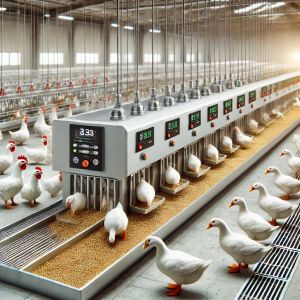
Automated feeding systems are advanced technologies designed to efficiently manage the feeding process for livestock and poultry. These systems deliver precise amounts of feed at scheduled intervals, ensuring optimal nutrition and growth for animals. By automating the feeding process, these systems reduce labor costs, minimize waste, and improve overall farm efficiency. They are widely used in various types of animal husbandry, including dairy farms, poultry operations, and pig farms, contributing to better animal health, consistent growth rates, and enhanced production outcomes. Automated feeding systems are essential for modern agriculture, supporting sustainable and efficient farm management.
automated feeding systems, livestock feeding, poultry feeding, agricultural automation, precision feeding, feed management, efficiency, animal husbandry
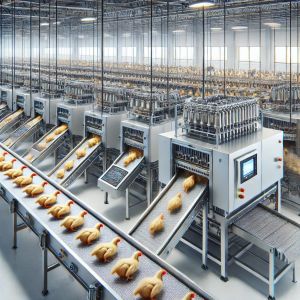
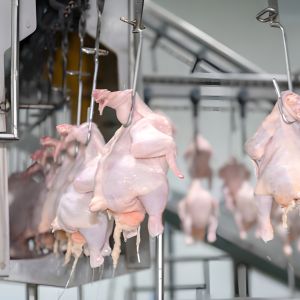
.Automatic chicken graders are advanced systems designed to sort and grade poultry based on specific criteria such as weight, size, and quality. These machines utilize sensors and automation technology to quickly and accurately categorize chickens, enhancing efficiency and consistency in poultry processing. By reducing manual labor and minimizing human error, automatic chicken graders ensure uniformity in product quality and streamline the production process. This technology is essential for optimizing operations in poultry farms and processing plants, contributing to higher productivity and better market standards.
automatic chicken graders, poultry grading, automated sorting, quality control, poultry processing, efficiency, weight grading, size sorting
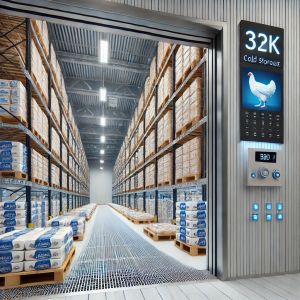
Cold storage is a technology used to preserve perishable goods by maintaining low temperatures, slowing down spoilage, and extending shelf life. This method involves the use of refrigeration systems to create temperature-controlled environments essential for storing food products, pharmaceuticals, and other sensitive items. Cold storage is crucial for industries that require constant temperature regulation to ensure product quality and safety. By reducing spoilage and maintaining freshness, cold storage helps optimize inventory management and supports the efficient distribution of perishable goods.
cold storage, refrigeration, low-temperature storage, perishable goods preservation, cooling technology, extended shelf life, temperature-controlled storage, food preservation
Controlled Atmosphere (CA) Storage is a technology used to prolong the shelf life of perishable goods by regulating the composition of gases within the storage environment. This technique involves adjusting the levels of oxygen, carbon dioxide, and nitrogen to slow down ripening and prevent spoilage in fruits, vegetables, and other sensitive products. CA storage is essential for maintaining product quality during long-term storage and transportation, reducing waste, and ensuring that fresh produce reaches consumers in optimal condition. This advanced storage solution is widely used in the agricultural and food industries to enhance the longevity and quality of perishable goods.
controlled atmosphere storage, CA storage, preservation, gas composition, food storage, shelf life extension, post-harvest technology, storage solutions
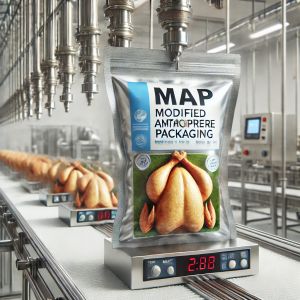
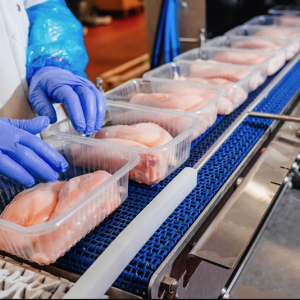
Modified Atmosphere Packaging (MAP) is a technology that alters the composition of gases within a package to extend the shelf life and maintain the quality of perishable foods. By adjusting levels of oxygen, carbon dioxide, and nitrogen, MAP slows down the spoilage process, reduces microbial growth, and preserves the color, texture, and flavor of the food. This packaging method is widely used for fresh produce, meats, ensuring they remain fresh and appealing to consumers. MAP is a crucial innovation in food packaging, enhancing product safety, reducing waste, and improving overall food quality.
Modified Atmosphere Packaging, MAP, food preservation, gas mixture, shelf life extension, packaging technology, fresh produce, protective packaging
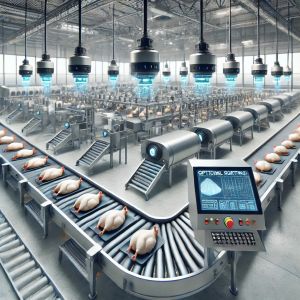
. Optical sorting systems are sophisticated automated technologies used for quality control and sorting across various industries, particularly in food processing. These systems utilize advanced sensors and optical technology, such as cameras and lasers, to detect and remove defective or unwanted items based on visual characteristics like color, size, shape, and texture. By enhancing precision and efficiency in the sorting process, optical sorting systems improve product quality, reduce waste, and increase operational efficiency. This technology is crucial for ensuring the consistency and safety of products while optimizing production workflows and minimizing human error.
optical sorting systems, automated sorting, quality control, defect detection, food processing, color sorting, efficiency, waste reduction
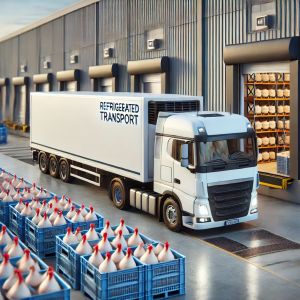
Refrigerated transport refers to the transportation of perishable goods in temperature-controlled environments to maintain product quality and safety. Utilizing refrigerated trucks, containers, and specialized cooling systems, this method ensures that food, pharmaceuticals, and other sensitive items remain at optimal temperatures throughout transit. Refrigerated transport is a critical component of cold chain logistics, providing a reliable solution for the safe delivery of fresh and frozen products over long distances. This technology is essential for preserving the integrity and extending the shelf life of perishable goods, supporting efficient supply chain management and meeting consumer demands for high-quality products.
refrigerated transport, cold chain logistics, temperature-controlled shipping, perishable goods, refrigerated trucks, cooling systems, supply chain management
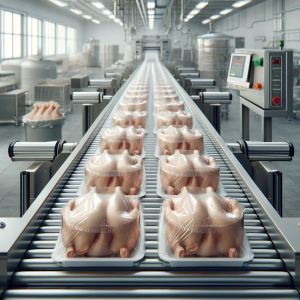
Shrink wrap packaging uses a plastic film that tightens around products when heat is applied, forming a secure, tamper-evident seal. This method is ideal for bundling multiple items, protecting goods during shipping, and improving product visibility and presentation. Commonly used across industries such as food and beverage, retail, and manufacturing, shrink wrap packaging ensures products remain intact and clean, enhancing both durability and aesthetic appeal. Its versatility and efficiency make it a popular choice for reliable and cost-effective packaging solutions.
shrink wrap packaging, shrink film, protective packaging, heat shrink, product bundling, tamper-evident seal, plastic wrapping, industrial packaging
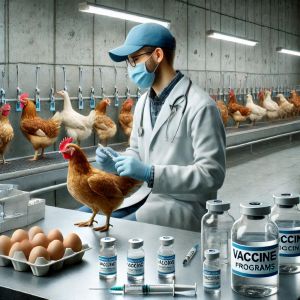
Vaccination programs are organized efforts aimed at immunizing populations against infectious diseases through the administration of vaccines. These programs are crucial for preventing the spread of diseases, protecting public health, and achieving herd immunity. Effective vaccination programs involve coordinated efforts in vaccine distribution, public education, and healthcare delivery. They target a wide range of infectious diseases, such as measles, polio, influenza, and COVID-19, ensuring that communities are protected and healthcare burdens are reduced. Vaccination programs are fundamental components of global health initiatives, striving to eliminate and control preventable diseases worldwide.
vaccination programs, immunization, public health, disease prevention, vaccine distribution, herd immunity, infectious diseases, health initiatives
Vacuum packaging is a technique that involves removing air from a package before sealing it, significantly extending the shelf life of perishable items by inhibiting the growth of bacteria and mold. This method is widely used in the food industry for products such as meats, cheeses, and prepared meals, ensuring they remain fresh and protected from external contaminants. Vacuum packaging also reduces the volume of the packaged goods, making storage and transportation more efficient. This technology is essential for maintaining product quality, enhancing food safety, and minimizing waste.
vacuum packaging, vacuum sealing, food preservation, air removal, extended shelf life, protective packaging, freshness retention, vacuum pack
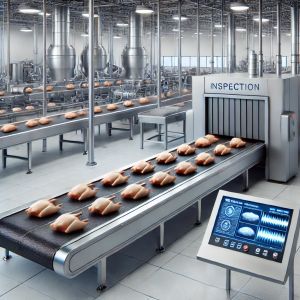
X-ray inspection systems are advanced technologies used for non-destructive testing and quality control in various industries. These systems employ X-ray imaging to detect contaminants, defects, and inconsistencies within products, ensuring safety and compliance with regulatory standards. Widely utilized in the food, pharmaceutical, and manufacturing sectors, X-ray inspection systems provide detailed internal views of packaged goods and materials without causing any damage. This technology is essential for maintaining high product quality, enhancing consumer safety, and optimizing production processes by enabling thorough and accurate inspections.
X-ray inspection systems, product inspection, quality control, contamination detection, non-destructive testing, food safety, industrial inspection, packaging inspection
Name: Kritsada Mapaisarnsin
Address: Bangna-Trad Road, Km. 20 Bang Phli Yai, Bang Phli District Samut Prakan 10540 Thailand
Website: www.cpf.co.th
Profile URL: https://www.thaipoultry.petrolsolutions.com/www.cpf.co.th